

Table of Contents
Dry Season vs Rainy Season in Bali: Which is Better for Trip? Bali does not follow the four-season calendar that most travelers are used to. Instead, this Indonesian island moves to a tropical rhythm of just two seasons: dry and wet. Choosing between dry season vs rainy season in Bali comes down to a few key factors. - is it better to visit Bali during the dry season or the rainy season?
The honest answer is that both seasons have real plus points and the 'best' one depends totally on what sort of holiday you are after. This guide will assist you to understand the weather, crowds, prices and best things to do in each season so you can choose exactly when to book your flights with confidence.The question that every trip to the island boils down to is this: dry season vs rainy season in Bali.

Understanding Bali’s Two Seasons
Because Bali is so close to the equator temperatures do not change much from one season to the next and are usually between 26°C and 33°C (79°F to 91°F). What changes over the course of the year is not the heat but the humidity and rain.
Dry season in Bali: roughly April to October, with July, August and September being the peak of clear skies and low rainfall.
Rainy season in Bali: November to March, December and January are usually the wettest months.
This is the basic difference between Dry season vs rainy season in Bali — one brings predictable sunshine, the other cooler air and greener scenery. Knowing this difference makes it much easier to decide which season suits your travel plans best.
Rains in Bali aren’t usually all day, even in the rainy season. Rain usually comes in brief, heavy bursts – often in the afternoon or evening – then clears to clear skies again. So “rainy season” doesn’t mean your whole trip will be ruined by rain, just plan for occasional showers.To understand the dry season vs rainy season in Bali we need to know what actually changes throughout the year and what doesn’t.
Dry Season in Bali (April–October)
Weather and Climate
During the dry season, Bali enjoys long stretches of sunshine, lower humidity, and minimal rainfall. The skies will be mostly clear and blue, so this is a great time to plan outdoor activities without worrying about your schedule being rained out. August and September usually see the lowest chance of rain, while April and October act as transitional months with a bit more moisture in the air.

Crowds and Prices
But that predictability comes at a cost — literally. The dry season is the high season for tourists in Bali, especially from July to September when the school holidays in many countries meet the best weather. Anticipate:
1. Hotels and villas are pricier, especially in Seminyak, Canggu and Ubud
2. More crowded beaches, temples, popular viewpoints
3. The requirement to book accommodation, tours and restaurants well in advance.
4. Greater traffic congestion in high-density tourist areas
For a quieter take on the dry season, look to the shoulder months of April, May, June and October, which are still mostly dry and sunny, but with far fewer crowds and better rates than the July-August rush.
Best Activities for Dry Season
Dry season is great for anything that requires clear skies and calm conditions:
1. Days on the beach in Seminyak, Nusa Dua or Uluwatu without the surprise downpours
2. Less choppy boat crossings for island hopping to Nusa Penida, Nusa Lembongan or the Gili Islands
3. Snorkeling and scuba diving with improved underwater visibility
4. Hike Mount Batur at sunrise, on drier and safer trails Surf world-famous breaks on the Bukit Peninsula
Rainy Season in Bali (November–March)
Weather and Climate
The rainy season brings more humidity and more frequent rain, but it’s not a washout. Most days still have several hours of sunshine with rain usually coming in brief, heavy downpours rather than a continuous drizzle. December and January are normally the wettest months with February and March gradually returning to drier conditions.
Rain has an underrated benefit. It cools things off. Many visitors comment how the air is more refreshing after a rain shower than the muggy stretches of a dry season afternoon.
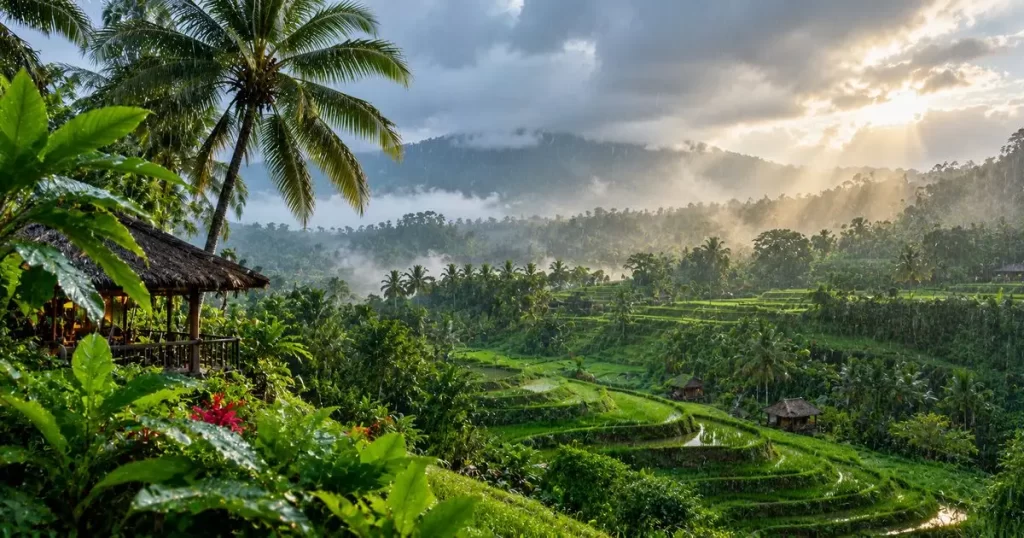
And this is exactly why the rainy season deserves a fair shake in the Dry season vs rainy season in Bali debate — it is far from the constant downpour many travelers envision. Bali’s rainy season, apart from the name, is often the more pleasant of the two surprises.
Crowds and Price
The Rainy season in bali is the low season, apart from the Christmas and New Year period, which is like its own mini peak season with premium pricing. That translates into actual savings:
1. Reduced rates on hotels, villas and resorts.
2. More flexibility to book at the last minute.
3. Less queues at popular spots like Tanah Lot or Tegallalang Rice Terraces.
4. More relaxed and less commercial atmosphere in the tourist hubs.
Best Activities for Rainy Season
Why fight the rain, when the best itineraries for the rainy season lean into what this time of year does best:
1. Rain gives life to green, lush landscapes – rice terraces and jungle scenery are most vibrant after rainfall.
2. Hunting for waterfalls that are at their best this season like Tegenungan or Sekumpul.
3. Spa days and wellness retreats – ideal for a rainy afternoon.
4. Cultural and culinary activities such as cooking classes and temple visits and art villages at Ubud.
Dry Season vs Rainy Season in Bali: Quick Recap
Summing up, the dry season (April-October) means sunny skies and low humidity but larger crowds, especially July-September, and higher prices. It’s the best time for beach days, diving, hiking and surfing.
The rainy season (November to March) however, brings warmer, more humid air with short bursts of rain, but rewards you with thinner crowds outside the December–January holiday rush, more budget-friendly rates, and a lush, green landscape perfect for chasing waterfalls, unwinding at a spa, or diving into Bali’s culture.
When weighing dry season vs rainy season in Bali, it helps to look at the trade-offs side by side.

So Which Season Should You Choose?
If you select the dry season in Bali: You want the best chance of reliable sunshine. You will be outside or in the water most of the time. You don’t mind paying a premium or booking far in advance.
If you want to visit in the rainy season in Bali then go for: You’re on a tighter budget. You prefer fewer crowds. You’re looking to see the landscapes of Bali at their greenest. You don’t mind moving your day around a short afternoon shower.
There's also a strong case to be made for the shoulder months – April, May, June, September and October – which often offer a sweet spot of reasonable weather, fewer tourists and better prices than the extremes of either season. The dry season vs rainy season in Bali really depends on what is most important to you – guarantyd sunshine or a quieter, cheaper trip.
Conclusion
There is no ‘right’ time to go to Bali, only the time that fits your style of travel and priorities. For predictably sunny days and outdoor adventure, the dry season won’t disappoint. If you’re after value, less crowds and a more lush and atmospheric version of the island, the rainy season has a lot to offer as well.
It’s a good idea to check out a detailed month-by-month breakdown like the Bali weather guide from Indonesia before you lock in your dates.Travel so you can find that perfect travel window that works best for you. No matter what season you choose, Bali’s temples, beaches, rice terraces and friendly hospitality make it a rewarding destination all year long.
Coming to Bali? TC Holidays can help you book the perfect trip, whatever season suits you best – from dry season beach escapes to rainy season cultural retreats. Call TC Holidays today and make this your next adventure. For more details, contact us on WhatsApp:https://wa.me/919994411077
